Finally Visiting Dry Tortugas National Park: Was It Worth the Wait?
Some trips take patience. For Brian and Michelle from Livin’ Our Vision, visiting Dry Tortugas National Park had been years in the making. Every time they came to Key West, ferry tickets were sold out.
This time, with a little planning and a bit of luck, they finally secured spots and boarded the ferry for one of the most remote national parks in the United States.
With only four hours on the island, every minute mattered.
The Early Morning Start in Key West
The day begins before most of Key West is fully awake. Roosters crow. Chickens wander the streets. Visitors quietly head toward the dock.
Then comes the captain’s horn blast as the ferry backs away from the historic harbor — a moment you can watch during the ferry departure.
The boat is a 113-foot-high-speed catamaran traveling at about 30 mph. The ride takes approximately 2½ hours each way. That means five hours of your day are spent on open water.
It’s not a quick excursion. It’s a full-day commitment.
Breakfast and lunch are included on the ferry, with gluten-free and vegan options available. Still, check-in starts at 7:00 AM, and you don’t return to Key West until around 5:30 PM.
The History Behind Dry Tortugas
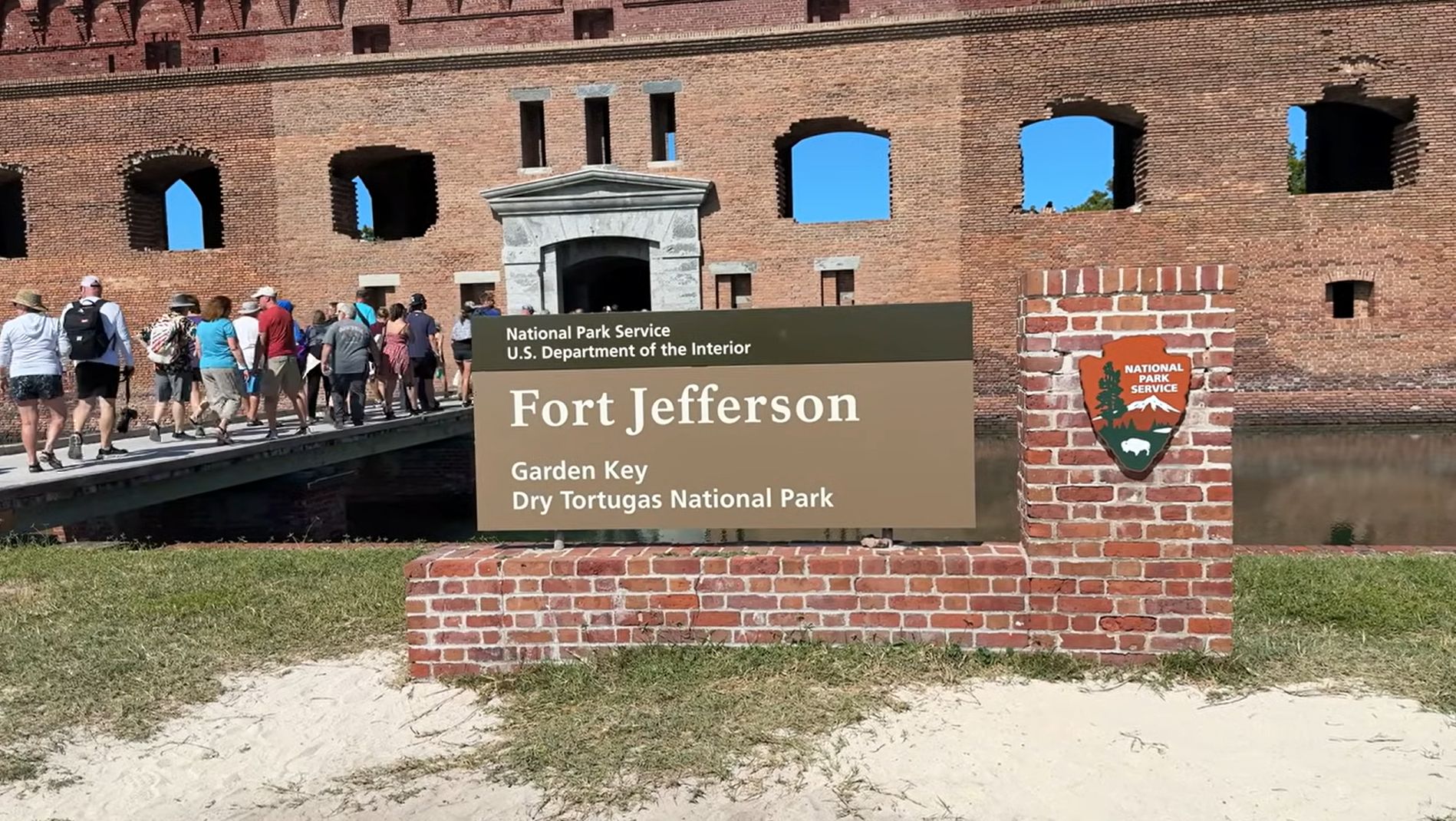
Long before Fort Jefferson was built, these islands were little more than a remote speck in the Gulf.
In 1513, Ponce de León sailed through the area and named the islands Los Tortugas because of the abundance of sea turtles. The ranger shares this story during the guided tour in the segment on Ponce de León and the naming of Florida.
Later, sailors added the word “Dry” to warn others that there was no fresh water available here — a serious concern for early explorers.
The surrounding reefs made the area both dangerous and strategically valuable. Shipwrecks became common. In fact, the waters around Dry Tortugas hold one of the highest concentrations of shipwrecks in North America.
That danger is exactly why Fort Jefferson was constructed in 1846.
Exploring Fort Jefferson
Fort Jefferson is massive. Built with more than 16 million bricks, it was designed to control access to the Gulf of Mexico.
During the tour, the guide explains how brick shipments changed during the Civil War. The larger orange bricks came from Pensacola before the war, while smaller red bricks were shipped from Maine afterward — details highlighted in the discussion of Fort Jefferson brick construction.
You can explore the fort on your own or join a guided tour. Visitors climb staircases, walk the upper walls, and look out over the endless ocean in every direction.
The fort also served as a prison. Dr. Samuel Mudd — the physician who treated John Wilkes Booth — was once held here. Life on the island was harsh. There was no natural fresh water. Supplies arrived by ship. Heat, humidity, and storms made daily living difficult.
Despite its scale, the fort was never fully completed. Hurricanes and salt exposure continue to wear down the brickwork to this day.
Snorkeling and Beach Time
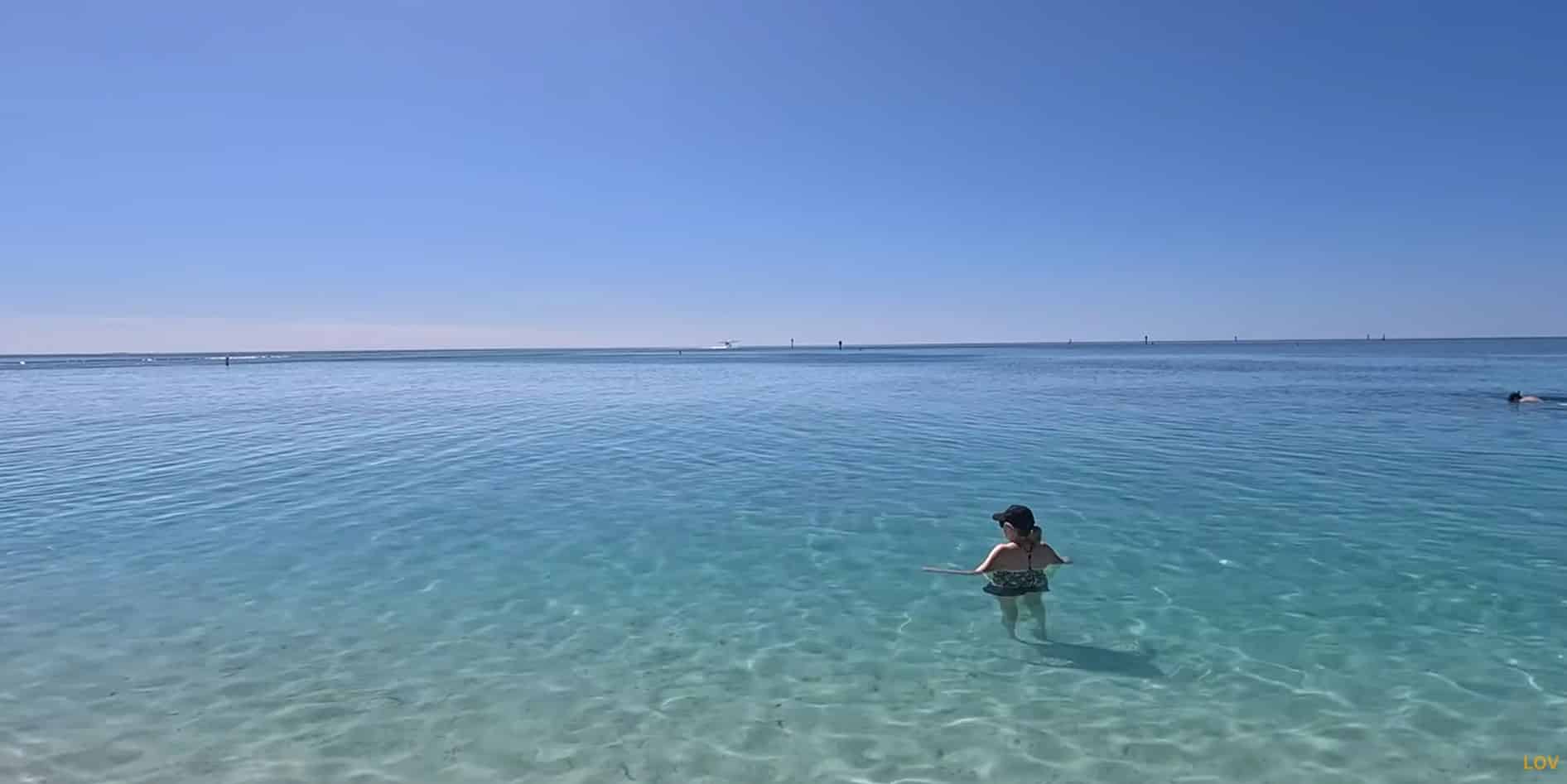
Once you step off the ferry, your time begins ticking down.
Some visitors focus entirely on exploring the fort. Others head straight to the beaches. The ferry provides gear, and they explain the shallow areas and setup during the section on snorkeling at Dry Tortugas.
The water is clear and relatively shallow in many spots, making it approachable even for beginners. Fish, coral, stingrays, and occasionally sea turtles glide through the water.
One important detail many people don’t realize: there are no lockers on the boat. You must carry your belongings with you at all times. That practical tip is mentioned during the discussion about no lockers on the ferry.
Packing light makes a big difference.
Living on One of America’s Most Remote Islands
Dry Tortugas feels isolated because it is.
A small group of park rangers rotate on and off the island. Groceries and fuel arrive by boat. There are no stores, no restaurants, and no quick conveniences.
When the ferry leaves each afternoon, the island becomes quiet again.
That remoteness is part of its appeal.
Is Dry Tortugas Worth the Money?
For Brian and Michelle, the ferry cost a little over $400 for two people. That includes transportation, breakfast, lunch, and snorkeling gear.
They openly discuss the price and whether the experience justified it during their conversation about whether Dry Tortugas is worth the money.
It isn’t inexpensive. The seaplane option is even more costly and allows less time on the island.
Their conclusion? If you’ve been to the Keys multiple times, it’s worth doing at least once. Four hours feels like enough time to see the fort and enjoy the beach — though you may still wish you had more.
What to Know Before You Book

If Dry Tortugas is on your list:
- Book tickets well in advance.
- Arrive early for check-in.
- Expect a long day with five hours on the water.
- Bring sunscreen and water.
- Pack light since you’ll carry everything.
- Plan how you want to divide your four hours.
Dry Tortugas National Park isn’t the easiest destination to reach. That’s exactly what makes it memorable.
After four trips to the Florida Keys, Brian and Michelle finally made it happen.
And sometimes, the adventures that take the most patience turn out to be the most rewarding.